How Much Does a Meeting Actually Cost?
Most meetings cost more than the combined salary in the room. Here's the actual math, plus a tool to run the number before you schedule the next one.
By Blake Johnston
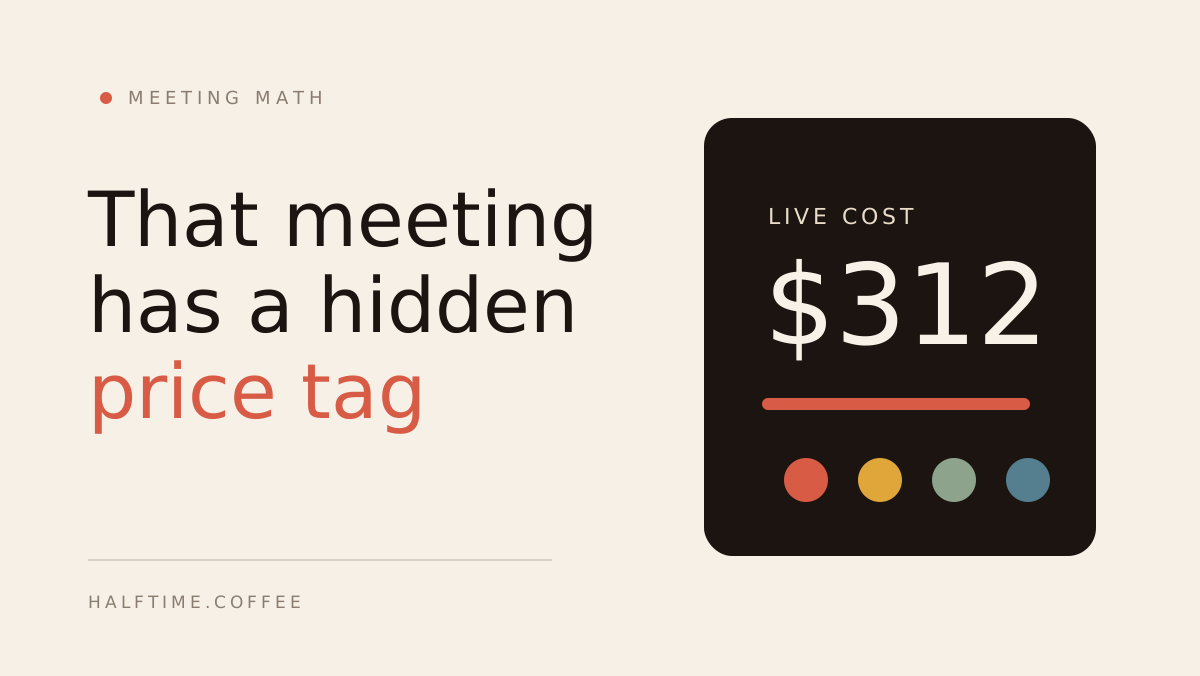
Imagine the standup your team had this morning had a counter in the top corner of the screen. Live numbers, ticking up by the second. By the time someone said "I'll keep it brief," the counter was already at $47. By the time the third person started screen-sharing a Figma you'd all seen, it was $190. By the time the meeting wrapped, six minutes over, the corner read $312.
You wouldn't sit through the whole thing. You'd cut someone off. You'd reschedule the Figma walk-through. You'd tell the person who joined "just to listen in" that they could read the notes later.
Nobody puts the counter up. So the meeting just costs $312 quietly, and the next one costs $312 quietly, and a year later your company has spent the price of a junior engineer on a recurring sync that was supposed to be a fifteen-minute check-in.
The actual math
The math is not complicated. It's just embarrassing once you see it written down.
Take everyone's annual salary. Divide by the 2,080 working hours in a year. That gives you their cost per hour. Multiply that by the meeting duration. Add it all up.
Then multiply the whole thing by 1.4. Salaries aren't what you actually pay people. There's payroll tax, benefits, equipment, software licences, the share of the rent, the desk in the office no one uses. The "fully loaded" cost of an employee is roughly 1.4 times their salary in most industries. Some companies use 1.25, some use 1.5, but somewhere in that range is closer to reality than the salary alone.
A 30-minute standup with three engineers ($130k each), a product manager ($160k), and a director ($200k) costs $252 fully loaded. Run it daily and you've spent $1,260 on it that week. Roughly $63,000 a year. For one standup.
That's a junior engineer's salary, going into a recurring meeting that often produces "I'm working on the thing I said I was working on yesterday" as the most useful update.
Why most "meeting cost" thinking is wrong
When people argue against meetings, they usually under-count what meetings actually cost. The salary math above is just the visible bill.
The hidden cost is bigger.
The context-switch tax. A 30-minute meeting at 10am doesn't cost an engineer 30 minutes of their day. It costs the 25 minutes of focus they'd built up before the calendar pinged, the 30 minutes of the meeting itself, and the 25 minutes it takes to get back into deep work afterwards. That's 80 minutes for a 30-minute meeting. For people whose job is to think about hard things for long stretches, the meeting cost is roughly triple what the calendar shows.
The fragmentation tax. Three 30-minute meetings spread across the day are not 90 minutes of meetings. They're a day with no usable focus block in it. The gaps between them are too short to start anything real. So the engineer answers Slack, refactors something low-stakes, or just waits. The salary clock keeps running for the gaps too.
The pre-meeting prep tax. Anyone who actually prepares for the meeting (read: probably not the engineers, but possibly the PM and the director) spends thirty to sixty minutes building a doc, reviewing the dashboard, or making the slide. That cost lands on the meeting whether you put it there or not.
The follow-up tax. After the meeting, someone has to write up what was decided. Another twenty minutes. Sometimes more, if the meeting didn't actually decide anything and they have to invent the decision retroactively.
The salary math says $252. That's just the receipt. The real cost of the recurring daily standup, once you fold in the focus loss, the prep, the follow-up, and the gaps between meetings nobody can use, is closer to two or three times that. The $63,000 line item is realistically a $150,000 displacement.
"But the meeting is important"
Sure. Some are. Some are genuinely cheaper than the alternative, which is decisions made with worse information, or work that goes in three different directions because nobody synced.
The point isn't that meetings are bad. The point is that the cost is not zero, and most teams act like it is.
You wouldn't approve a $600 expense without a reason. You wouldn't approve a $150,000 annual line item without a really good reason. But you'd schedule a recurring meeting in thirty seconds without checking whether it was the cheapest way to get the outcome.
A useful gut-check: if the meeting were billed back to your team as a real expense, with the dollar figure showing up on your budget at the end of every quarter, would you keep it? Would you keep all of it? Would you keep the people in it who never speak?
If the answer is no, you've found the work.
Quick test on whether that meeting deserves to exist →
What to do about it
A few things that work, in order from cheapest to hardest.
Cut the duration before you cut the meeting. A 30-minute meeting becomes a 20-minute meeting if you set the calendar invite for 20 minutes. A 60-minute meeting becomes a 45-minute meeting the same way. Parkinson's Law is real. Meetings expand to fill the slot. Make the slot smaller and almost nothing of value is lost.
Cut the attendee list before you cut the topic. Half the people in most meetings are there "for visibility." Visibility is not free. Send them the notes instead. The cost drops by half, and the meeting gets faster because there are fewer people performing for an audience.
Replace the recurring sync with a written update. Standups, status meetings, and "let's catch up on where we are" meetings can almost always be a Slack thread or a shared doc. The async version takes ten minutes for everyone combined and produces a searchable record. The meeting version costs $252 and produces nothing anyone can find next week.
Default the calendar slot to 25 minutes, not 30. Five-minute buffers between meetings are not optional. A back-to-back-to-back day is a day where someone is forty minutes late to lunch and frazzled by 2pm. Build the buffer in or it gets paid for in mistakes later.
Kill one recurring meeting per quarter, on purpose. Not because it's bad. Because it's there. Most teams accumulate meetings the way browsers accumulate tabs. A standing rule that something dies every quarter forces the team to decide which one is least useful, and it almost always turns out to be one nobody would have admitted disliking unless asked.
Give the surviving meetings a real agenda. A meeting worth its cost has topics that need the room: decisions, blockers, tradeoffs. If yours run on "updates" and "discussion," start with meeting agenda topics that aren't status updates.
The bigger picture
The dollar figure is the cost to your company. There's a second figure that's the cost to you personally, and it's worse. Run your meeting hours through the Life in Meetings calculator and it'll convert your weekly load into the number of full nights of sleep, marathons, or back-to-back Lord of the Rings runs you've donated to your calendar over your career. It is not a flattering number.
Both figures belong on the same intuition.
A meeting is a transaction. The product is a decision, an alignment, or a piece of information. The price is the wages, the focus loss, the prep, the follow-up, and the months of your life you don't get back. If the product isn't worth the price, don't buy it. If you can get it cheaper somewhere else (a doc, a Loom, a Slack thread), buy it there. If the meeting is genuinely the cheapest way, run it tight, end on time, and don't invite anyone who isn't going to talk.
Most meetings would lose this test if anyone bothered to run it. Run it.
Meetings are the expensive part of the day. The thing most teams are missing isn't fewer meetings, it's a lighter way to stay connected without booking another one. Halftime is a 2-minute async game and prompt every workday, no calendar invite required. The daily ritual that doesn't add to the line item. Free for 30 days, no card needed.
FAQ
Common questions
How do you calculate the cost of a meeting?
Take everyone's annual salary, divide by 2,080 working hours to get cost per hour, multiply by the meeting duration in hours, then sum the result for everyone in the room. Multiply the total by 1.4 to account for the fully-loaded employee cost (payroll tax, benefits, equipment, software, facilities). A 30-minute meeting with three engineers at $130k, a PM at $160k, and a director at $200k costs about $252 fully loaded.
How much does a recurring meeting actually cost per year?
A daily 30-minute standup with five people earning around $150k each costs roughly $63,000 per year in salary alone. That's a junior engineer's salary going into one recurring meeting. Once you fold in the hidden costs (focus loss, prep, follow-up, gaps between meetings nobody can use), the real annual cost is closer to $150,000.
What hidden costs do meetings have beyond salary?
Four. Context-switch tax: a 30-minute meeting at 10am can cost an engineer 80 minutes of their day once you account for ramp-up and recovery. Fragmentation tax: three 30-minute meetings spread across the day leave gaps too short to do real work. Prep tax: the doc, dashboard, or slides someone built before the meeting. Follow-up tax: writing up what was decided afterwards.
How do you reduce meeting costs?
Five things, in order of effort. Cut the duration before you cut the meeting (a 30-minute meeting becomes a 20-minute meeting when you set the invite for 20 minutes). Cut the attendee list. Replace recurring syncs with written updates. Default calendar slots to 25 minutes instead of 30 to build in buffers. Kill one recurring meeting per quarter on purpose, just because it's there. Most meetings would lose a cost-benefit test if anyone bothered to run it.
How do you decide if a meeting is worth its cost?
A useful gut check: if the meeting were billed back to your team as a real expense, with the dollar figure showing up on your budget every quarter, would you keep it? Would you keep all of it? Would you keep the people in it who never speak? If the answer is no for any of those, you've found the work.