Games for Remote Teams That Actually Get Played
A practical guide to games for remote teams. The five formats that work, how to pick one for your team, and the agile games most lists forget.
By Blake Johnston
If you search "games for remote teams," you get the same article forty times. A list of fifteen games, no opinion about which one fits your team, and a quiet assumption that the hard part is finding games. It isn't. Games are everywhere. The hard part is finding ones that get played more than once.
Most remote team games die the same way. Someone organizes a session, half the team can't make the time, the people who show up enjoy it, and then it never happens again because organizing it was a job nobody wanted. The game was fine. The format was wrong.
So before another list of titles, here's the thing that actually decides whether a game sticks. Not the game. The shape of how it runs.
Quick answer. Games for remote teams come in five formats. Live games hosted at a meeting, async daily or weekly games that run without a host, chat games inside Slack, meeting-embedded games inside Microsoft Teams or Zoom, and agile games like estimation and retro formats. Live games get picked most and stick least. Async daily games stick most because nobody has to schedule them. Pick the format first, then the game.
The five formats, and which one survives a busy week
The single biggest difference between remote games isn't the genre. It's whether someone has to run them. Here's every format on the dimensions that decide if it lasts.
| Format | Runs as | Host needed | Survives time zones | Best for |
|---|---|---|---|---|
| Live hosted | Scheduled call | Yes | No | Offsites, one-off socials |
| Async daily | Opens daily | No | Yes | Ongoing team connection |
| Slack / chat | In the channel | No | Yes | Teams that live in Slack |
| Meeting-embedded | Inside a call | Light | Partly | Standups, all-hands warmups |
| Agile games | Inside agile | Light | Partly | Scrum and sprint teams |
The pattern is hard to miss. Everything that needs a host and a shared time slot fails the two tests that remote teams care about most. Everything that runs on its own survives them. That's the whole game.
Live hosted games
You schedule a call, everyone joins, someone runs trivia or a quiz, and the energy in the room is genuinely good. Live games are the most fun per session and the most expensive to keep alive. Someone has to own the calendar invite, build or buy the content, and absorb the no-shows. They're great for an offsite or a quarterly social. They are a bad bet for "every week," because the cost of running them lands on one person who eventually stops.
If a live event is what you actually need, that's fine. Just know you're signing up for the hosting, not just the game. We made the longer case for why async games beat virtual team building events when the goal is an ongoing ritual rather than a one-off.
Async daily games
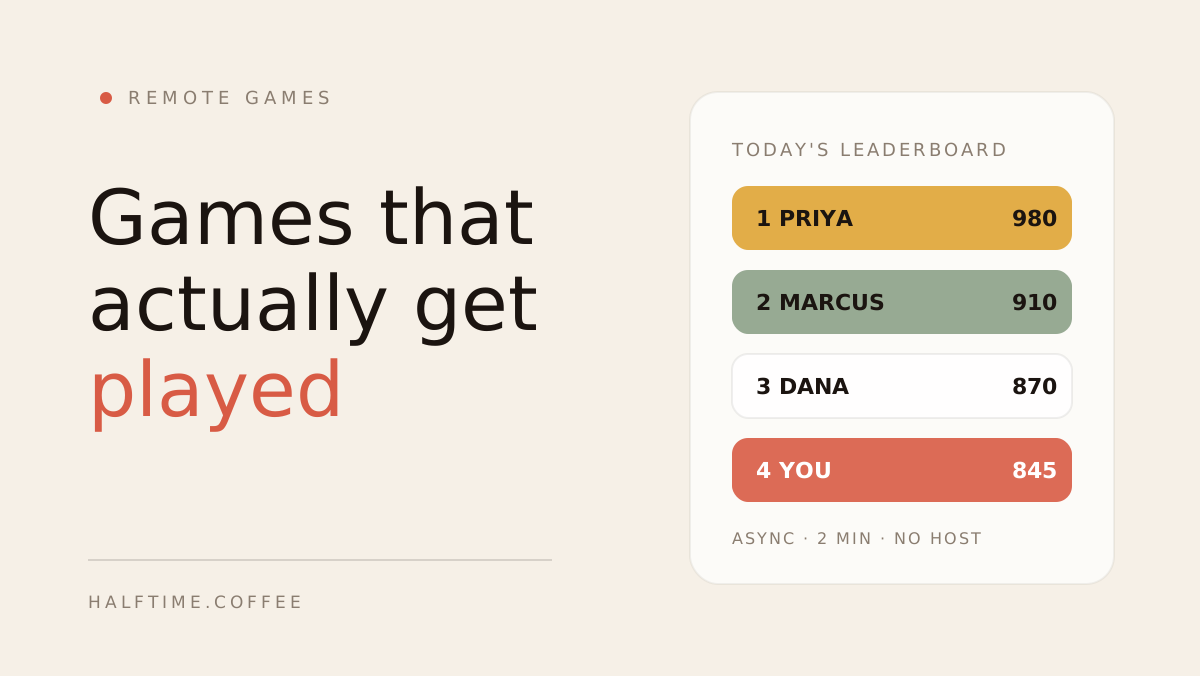
An async game opens in the morning and stays open all day. People play in their own tab whenever they get a minute, scores land on a shared leaderboard, and the conversation happens in chat. No call, no host, no calendar. This is the format that survives a busy week, because the only thing required of anyone is two minutes whenever they feel like it.
This is also the format almost every "games for remote teams" list skips, because it isn't a game you find, it's a habit you set up. It's what Halftime is built around. If you want the specific titles that work in this format, we listed 15 quick team building games for remote teams with the arcade, word, trivia, and strategy picks broken out.
Slack and chat games
If your team lives in Slack, the lowest-friction game is one that happens in the channel they're already in. The risk is noise. A game that posts ten messages an hour trains people to mute the channel, which is the opposite of what you wanted. The ones that work stay short, stay optional, and keep the result in the channel without the play-by-play. We covered the specifics in Slack games for remote teams that don't annoy the channel.
Meeting-embedded games
A two-minute game at the top of a meeting can wake a room up better than a round of "how's everyone doing." The rule is that it has to load from a link, run in everyone's own tab, and end before it eats the agenda. Anything that needs a download or a shared screen turns a warmup into a tech-support session. For the platform-specific version, see Microsoft Teams games for work, which works the same way in Zoom and Google Meet.
Agile games
This is the format the generic lists forget entirely, and it's the one most likely to fit if you run sprints. Agile games aren't a break from the work. They're the work, made better.
Agile games for remote teams
If your team runs standups, sprints, and retros, you already have recurring meetings that games can improve without adding a single thing to the calendar. There are three kinds worth knowing.
Estimation games. Planning poker is the classic. Everyone sizes a story privately, then reveals at once, and the disagreements are where the useful conversation lives. It turns estimation from a senior-person-says-a-number ritual into something the whole team actually engages with. Done remote, it's just a shared link and a simultaneous reveal.
Retro games. The retrospective is the meeting most worth gamifying, because a structured retro is a better retro. Instead of "what went well, what went badly," you give the session a shape people remember. Sailboat. 4Ls. Mad Sad Glad. Start Stop Continue. Each one frames the same conversation differently and pulls out things a blank page won't. We keep a set of retrospective prompt templates you can run straight from the browser, and a wider list of sprint retrospective ideas for when the format goes stale.
Standup energizers. A two-minute game before the daily standup is the cheapest morale intervention there is. It costs nothing on the calendar because the meeting already exists, and it does more for a remote team's sense of being a team than most things that cost real money.
The reason agile games are the highest-leverage pick for a sprint team is simple. You're not asking anyone to show up to something new. You're making a meeting they already attend worth attending.
How to pick one
You don't need the perfect game. You need the right format for your team, and almost any decent game inside it. Run your situation through five questions.
How often do you want it. Daily means async, full stop. A live hosted game every day is a job, and the person doing it will quit. Weekly or monthly can support a hosted format. Match the cadence to the cost of running it.
How spread out is the team. More than two or three time zones kills live games. If half the team is asleep when the other half plays, async is the only format that includes everyone.
Who's going to run it. If the honest answer is "nobody has time," you need a format with no host. That rules out live and most chat-based competitions and points straight at async daily or meeting-embedded.
How much awkwardness can the room take. Competitive games (arcade, trivia, word) are safe because nobody has to share anything personal. Save the vulnerable stuff for teams that have already warmed up. We wrote more on reading the room in team building activities for work.
Is it opt-in. This is the one nobody gets right. The moment a game is mandatory, it stops being fun and becomes a meeting. Optional games get played more than required ones, because the people who play talk about it and the people who didn't start joining so they're not left out. Social pressure does the work that a calendar invite never could. The full argument is in the case against forced fun.
Where Halftime fits
Halftime is the async daily format from the table above, built so no one has to run it. A new game shows up every workday across more than 40 titles, people play in two minutes whenever they want, and scores accumulate on a leaderboard that gives the team something to talk about. Arcade, word, trivia, strategy, and creative games rotate, so the same person isn't always winning.
It's the format that survives the busy week, because the only thing it asks of anyone is two minutes and the only thing it asks of you is nothing. You can browse the full games library or it's free for 30 days, no card needed if you'd rather try it than read about it.
The games are the easy part. Making them daily and opt-in is what turns a one-off into a ritual. That's the whole idea behind Halftime, where the format above runs itself every workday. Free for 30 days, no card needed.
FAQ
Common questions
What are the best games for remote teams?
The best games for remote teams are short, browser-based, and don't need everyone online at the same time. They fall into five formats. Live games hosted at a meeting, async daily or weekly games that run without a host, chat games inside Slack, meeting-embedded games inside Microsoft Teams or Zoom, and agile games like estimation and retro formats. Most teams over-index on live games, which need the most coordination and stick the least. Async daily games survive busy weeks because nobody has to schedule them.
What games can you play over Microsoft Teams?
Any browser-based game that loads from a link works over Microsoft Teams, because you can drop the link in the meeting chat or a channel and everyone plays in their own tab. Short arcade, word, and trivia games work best because they don't hijack the meeting. Avoid anything that needs a download or a shared screen. For a full walkthrough see our guide to Microsoft Teams games for work.
What are good agile games for remote teams?
Agile games for remote teams come in three kinds. Estimation games like planning poker that turn story sizing into a quick reveal. Retro games like Sailboat, 4Ls, and Mad Sad Glad that give the retrospective a structure people remember. And standup energizers, a two-minute game before the daily standup that wakes the room up. The retro formats are the highest leverage because they make a meeting you already run worth attending.
What free games can remote teams play?
Drawasaurus, Skribbl.io, Codenames Online, and GeoGuessr are all free to play in the browser with no download. Halftime is free for teams up to six players across more than 40 games, which covers most small remote teams without a paid plan.
How do you play games with a remote team across time zones?
Pick async games over live ones. A live game needs everyone on the call at once, which is the exact thing time zones make impossible. An async game opens in the morning, stays open all day, and lets people play whenever their schedule allows. The scoreboard updates as results come in, so the team still shares a result without ever sharing a calendar slot.